Buy modeltorque.eu ?
We are moving the project
modeltorque.eu .
Are you interested in purchasing the domain
modeltorque.eu ?
domain@kv-gmbh.de · 0541-91531010
Buy modeltorque.eu ?
Which countries do not have speed cameras?
There are several countries that do not have speed cameras, including the United States, Canada, and Mexico. In the United States, the use of speed cameras varies by state, with some states having them and others not. In Canada, speed cameras are not widely used, and in Mexico, they are also not common. Additionally, some countries in Africa and Asia may not have widespread use of speed cameras. **
Which countries are Balkan countries?
The Balkan countries are located in the southeastern region of Europe and include Albania, Bosnia and Herzegovina, Bulgaria, Croatia, Greece, Kosovo, Montenegro, North Macedonia, Romania, Serbia, and Slovenia. These countries are characterized by their diverse cultures, histories, and landscapes, and are often considered a bridge between the East and the West. The term "Balkan" is derived from the Balkan Mountains, which run through the region. **


Similar search terms for Countries
Top-Angebote
Products related to Countries:
-
Drop Dash Deals Brushless ESC Speed Controller For RC Cars High Torque Performance Brushless ESC Speed Controller For RC Cars High Torque PerformanceTake your RC car to the next level with this 1pc 120A Brushless ESC. Designed for 110 and 18 scale electric vehicles, this highperformance speed controller offers exceptional control, smooth throttle response, and maximum torque. Perfect for RC...69,97 $*Shipping: 0,00 $Secure redirect to the provider
-
Tools, Home & Hobby Z Axis Power Feed For Milling Machine With 450 In lb Torque Adjustable Speed Control Z Axis Power Feed For Milling Machine With 450 In lb Torque Adjustable Speed ControlUpgrade your milling workflow with smoother movement, better control, and less manual effort. This Milling Machine Power Feed is designed for machinists who need reliable Zaxis automation on Bridgeport and other compatible kneetype mills. With 450...289,97 $*Shipping: 0,00 $Secure redirect to the provider
-
Tools, Home & Hobby X Axis Power Feed For Milling Machine 150 In lb Torque With Adjustable 0 200RPM Speed X Axis Power Feed For Milling Machine 150 In lb Torque With Adjustable 0 200RPM Speed"Upgrade your milling workflow with smoother, faster, and more consistent table movement using this milling machine power feed designed for precision machining tasks. Built for Bridgeport and compatible kneetype mills with a 58"" end shaft diameter,..."269,97 $*Shipping: 0,00 $Secure redirect to the provider
-
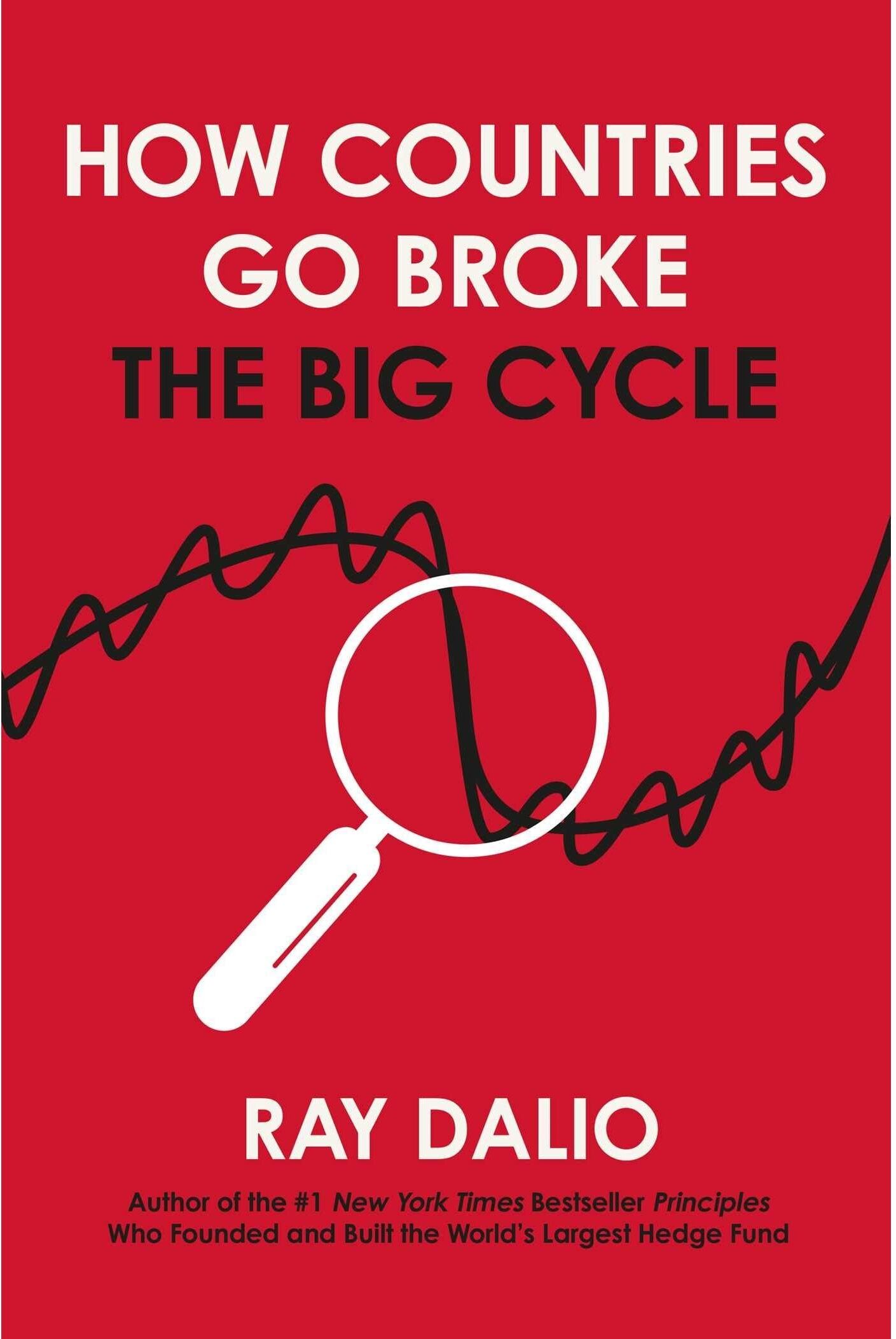
Simon and Schuster UK How Countries Go Broke: Principles for Navigating the Big Debt Cycle, Where We Are Headed, and What We Should DoAn urgent warning about the global economy from Ray Dalio, the #1 New York Times bestselling author of Principles. Do big government debts threaten our collective well-being? Are there limits to debt growth? Can a big, important reserve currency country like the United States really go broke – and what would that look like? For decades, politicians, policymakers and investors have debated these questions, but the answers have eluded them. In this groundbreaking book, Ray Dalio, one of the greatest investors of our time who anticipated the 2008 global financial crisis and the 2010–12 European debt crisis, shares for the first time his detailed explanation of what he calls the 'Big Debt Cycle'. Understanding this cycle is critical for helping policymakers, investors and the general public grasp where we are and where we are headed with the debt issue. Dalio's model points toward surprisingly straightforward solutions for dealing with the debt problems that the US, Europe, Japan and China face today. How Countries Go Broke also shows how these debt problems are related to the other forces – political within countries, geopolitical between countries, natural (droughts, floods and pandemics) and technological (most importantly, AI) – that together are causing what Dalio calls the 'Overall Big Cycle' changes in the world order. By reading this book, you will improve your understanding of what's happening now and what to do about it.17,99 £*Shipping: 2,99 £Secure redirect to the provider


-
Should the EU countries abolish the speed limit?
Abolishing the speed limit in EU countries could lead to an increase in road accidents, injuries, and fatalities. Speed limits are in place to ensure the safety of all road users and to regulate traffic flow. Removing speed limits could also have negative environmental impacts, such as increased carbon emissions and air pollution. It is important for EU countries to prioritize road safety and consider the potential consequences before making any decisions to abolish speed limits. **
-
Which Balkan countries are Islamic countries?
The Balkan countries with a significant Muslim population are Albania, Bosnia and Herzegovina, and Kosovo. These countries have a long history of Islamic influence and have a majority Muslim population. Islam has played a significant role in shaping the culture, traditions, and architecture of these countries. While other Balkan countries also have Muslim communities, these three countries are considered Islamic countries due to their majority Muslim population. **
-
At what power does the engine reach its maximum torque?
The engine reaches its maximum torque at 4,000 RPM. This means that the engine is able to deliver its highest twisting force to the wheels at this speed. Torque is an important factor in determining the engine's overall performance and ability to accelerate the vehicle. **
-
Why have many countries already abandoned nuclear power?
Many countries have abandoned nuclear power due to concerns over safety and the risk of accidents, such as the disasters at Chernobyl and Fukushima. Additionally, the high costs associated with building and maintaining nuclear power plants have made them less economically viable compared to renewable energy sources. The issue of nuclear waste disposal and the potential for nuclear proliferation have also contributed to the decision to phase out nuclear power in some countries. **

Why have the Islamic countries lost their power?
Islamic countries have faced a decline in power due to a combination of factors. These include internal conflicts, political instability, economic challenges, and a lack of technological advancement. Additionally, the colonial legacy and interference from external powers have also contributed to the weakening of Islamic countries. Furthermore, the failure to adapt to modern global dynamics and the lack of unity among Islamic nations have also played a role in their loss of power. **
What are industrialized countries and developing countries?
Industrialized countries are those that have advanced infrastructure, technology, and high levels of income and standard of living. These countries have highly developed economies and industries, and typically have a high level of urbanization and access to modern amenities. Developing countries, on the other hand, are those that are still in the process of industrialization and have lower levels of income and standard of living. These countries often have less advanced infrastructure and technology, and may have a higher proportion of their population engaged in agriculture. Developing countries are working towards improving their economic and social conditions to reach the level of industrialized countries. **
Top-Angebote
Products related to Countries:
-
Horsepower™ Pocket Pony™ Power Scrubber by Horsepower™ in BrownAbout This ProductTackle the toughest cleaning jobs in tight spaces with the Horsepower Pocket Pony Power Scrubber. This cordless, rechargeable, and waterproof scrubber delivers powerful oscillating action to pulverize dirt and grime with ease. Its...44,99 $*Shipping: 13,98 $Secure redirect to the provider
-
Multisell Products Hub Small Automatic Cigarette Rolling Machine, Fully Automatic Household Cigarette Rolling Machine For Multiple Countries redEffortless Cigarette Rolling at Home Experience the convenience of the Fully Automatic Household Cigarette Rolling Machine. Designed for individuals who enjoy rolling their own cigarettes, this machine provides a hasslefree and efficient way to...39,97 $*Shipping: 0,00 $Secure redirect to the provider
-
Drop Dash Deals Brushless ESC Speed Controller For RC Cars High Torque Performance Brushless ESC Speed Controller For RC Cars High Torque PerformanceTake your RC car to the next level with this 1pc 120A Brushless ESC. Designed for 110 and 18 scale electric vehicles, this highperformance speed controller offers exceptional control, smooth throttle response, and maximum torque. Perfect for RC...69,97 $*Shipping: 0,00 $Secure redirect to the provider
-
Tools, Home & Hobby Z Axis Power Feed For Milling Machine With 450 In lb Torque Adjustable Speed Control Z Axis Power Feed For Milling Machine With 450 In lb Torque Adjustable Speed ControlUpgrade your milling workflow with smoother movement, better control, and less manual effort. This Milling Machine Power Feed is designed for machinists who need reliable Zaxis automation on Bridgeport and other compatible kneetype mills. With 450...289,97 $*Shipping: 0,00 $Secure redirect to the provider
-
Which countries do not have speed cameras?
There are several countries that do not have speed cameras, including the United States, Canada, and Mexico. In the United States, the use of speed cameras varies by state, with some states having them and others not. In Canada, speed cameras are not widely used, and in Mexico, they are also not common. Additionally, some countries in Africa and Asia may not have widespread use of speed cameras. **
-
Which countries are Balkan countries?
The Balkan countries are located in the southeastern region of Europe and include Albania, Bosnia and Herzegovina, Bulgaria, Croatia, Greece, Kosovo, Montenegro, North Macedonia, Romania, Serbia, and Slovenia. These countries are characterized by their diverse cultures, histories, and landscapes, and are often considered a bridge between the East and the West. The term "Balkan" is derived from the Balkan Mountains, which run through the region. **
-
Should the EU countries abolish the speed limit?
Abolishing the speed limit in EU countries could lead to an increase in road accidents, injuries, and fatalities. Speed limits are in place to ensure the safety of all road users and to regulate traffic flow. Removing speed limits could also have negative environmental impacts, such as increased carbon emissions and air pollution. It is important for EU countries to prioritize road safety and consider the potential consequences before making any decisions to abolish speed limits. **
-
Which Balkan countries are Islamic countries?
The Balkan countries with a significant Muslim population are Albania, Bosnia and Herzegovina, and Kosovo. These countries have a long history of Islamic influence and have a majority Muslim population. Islam has played a significant role in shaping the culture, traditions, and architecture of these countries. While other Balkan countries also have Muslim communities, these three countries are considered Islamic countries due to their majority Muslim population. **
Similar search terms for Countries
-
Tools, Home & Hobby X Axis Power Feed For Milling Machine 150 In lb Torque With Adjustable 0 200RPM Speed X Axis Power Feed For Milling Machine 150 In lb Torque With Adjustable 0 200RPM Speed"Upgrade your milling workflow with smoother, faster, and more consistent table movement using this milling machine power feed designed for precision machining tasks. Built for Bridgeport and compatible kneetype mills with a 58"" end shaft diameter,..."269,97 $*Shipping: 0,00 $Secure redirect to the provider
-
Simon and Schuster UK How Countries Go Broke: Principles for Navigating the Big Debt Cycle, Where We Are Headed, and What We Should DoAn urgent warning about the global economy from Ray Dalio, the #1 New York Times bestselling author of Principles. Do big government debts threaten our collective well-being? Are there limits to debt growth? Can a big, important reserve currency country like the United States really go broke – and what would that look like? For decades, politicians, policymakers and investors have debated these questions, but the answers have eluded them. In this groundbreaking book, Ray Dalio, one of the greatest investors of our time who anticipated the 2008 global financial crisis and the 2010–12 European debt crisis, shares for the first time his detailed explanation of what he calls the 'Big Debt Cycle'. Understanding this cycle is critical for helping policymakers, investors and the general public grasp where we are and where we are headed with the debt issue. Dalio's model points toward surprisingly straightforward solutions for dealing with the debt problems that the US, Europe, Japan and China face today. How Countries Go Broke also shows how these debt problems are related to the other forces – political within countries, geopolitical between countries, natural (droughts, floods and pandemics) and technological (most importantly, AI) – that together are causing what Dalio calls the 'Overall Big Cycle' changes in the world order. By reading this book, you will improve your understanding of what's happening now and what to do about it.17,99 £*Shipping: 2,99 £Secure redirect to the provider
-
Multicon Wholesale Hub Waterproof Digital Servo High Torque & Speed Waterproof Digital Servo High Torque & SpeedElevate your RC car's performance with the 42KG waterproof digital servo designed for highspeed precision and durability. Perfect for enthusiasts and hobbyists, this servo boasts superior torque, ensuring optimal control over your 18 or 110 RC car,...84,97 $*Shipping: 0,00 $Secure redirect to the provider
-
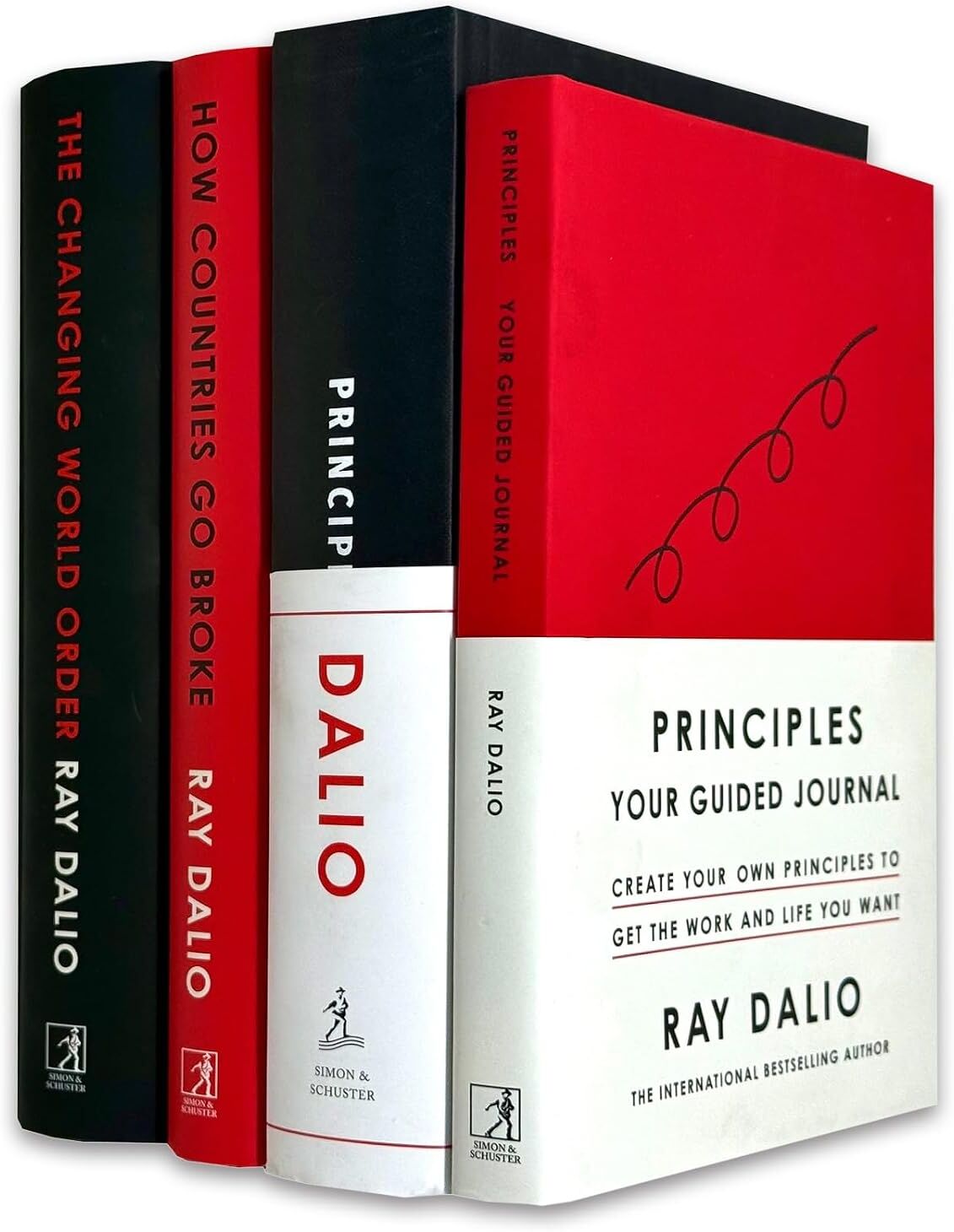
Ray Dalio Collection (Principles: Life and Work, The Changing World Order, How Countries Go Broke & Guided Journal) 4 Books Set - Non Fiction - Hardback Simon & SchusterTitles in this Set: 1. Principles: Life and Work 2. Principles for Dealing with the Changing World Order 3. How Countries Go Broke: The Big Cycle 4. Principles: Your Guided Journal Description: Principles: Life and Work In 1975, Ray Dalio founded an investment firm, Bridgewater Associates, out of his two-bedroom apartment in New York City. Forty years later, Bridgewater has made more money for its clients than any other hedge fund in history and grown into the fifth most important private company in the United States, according to Fortune magazine. Dalio himself has been named to Time magazine’s list of the 100 most influential people in the world. Along the way, Dalio discovered a set of unique principles that have led to Bridgewater’s exceptionally effective culture, which he describes as “an idea meritocracy that strives to achieve meaningful work and meaningful relationships through radical transparency.” It is these principles, and not anything special about Dalio—who grew up an ordinary kid in a middle-class Long Island neighborhood—that he believes are the reason behind his success. In Principles, Dalio shares what he’s learned over the course of his remarkable career. He argues that life, management, economics, and investing can all be systemized into rules and understood like machines. The book’s hundreds of practical lessons, which are built around his cornerstones of “radical truth” and “radical transparency,” include Dalio laying out the most effective ways for individuals and organizations to make decisions, approach challenges, and build strong teams. He also describes the innovative tools the firm uses to bring an idea meritocracy to life, such as creating “baseball cards” for all employees that distill their strengths and weaknesses, and employing computerized decision-making systems to make believability-weighted decisions. While the book brims with novel ideas for organizations and institutions, Principles also offers a clear, straightforward approach to decision-making that Dalio believes anyone can apply, no matter what they’re seeking to achieve. Principles for Dealing with the Changing World Order A few years ago, Ray Dalio noticed a confluence of political and economic conditions he hadn’t encountered before. They included huge debts and zero or near-zero interest rates that led to massive printing of money in the world’s three major reserve currencies; big political and social conflicts within countries, especially the US, due to the largest wealth, political and values disparities in more than 100 years; and the rising of a world power (China) to challenge the existing world power (US) and the existing world order. The last time that this confluence occurred was between 1930 and 1945. This realisation sent Dalio on a search for the repeating patterns and cause/effect relationships underlying all major changes in wealth and power over the last 500 years. In this remarkable and timely addition to his Principles series,...35,99 £*Shipping: 0,00 £Secure redirect to the provider
-
At what power does the engine reach its maximum torque?
The engine reaches its maximum torque at 4,000 RPM. This means that the engine is able to deliver its highest twisting force to the wheels at this speed. Torque is an important factor in determining the engine's overall performance and ability to accelerate the vehicle. **
-
Why have many countries already abandoned nuclear power?
Many countries have abandoned nuclear power due to concerns over safety and the risk of accidents, such as the disasters at Chernobyl and Fukushima. Additionally, the high costs associated with building and maintaining nuclear power plants have made them less economically viable compared to renewable energy sources. The issue of nuclear waste disposal and the potential for nuclear proliferation have also contributed to the decision to phase out nuclear power in some countries. **
-
Why have the Islamic countries lost their power?
Islamic countries have faced a decline in power due to a combination of factors. These include internal conflicts, political instability, economic challenges, and a lack of technological advancement. Additionally, the colonial legacy and interference from external powers have also contributed to the weakening of Islamic countries. Furthermore, the failure to adapt to modern global dynamics and the lack of unity among Islamic nations have also played a role in their loss of power. **
-
What are industrialized countries and developing countries?
Industrialized countries are those that have advanced infrastructure, technology, and high levels of income and standard of living. These countries have highly developed economies and industries, and typically have a high level of urbanization and access to modern amenities. Developing countries, on the other hand, are those that are still in the process of industrialization and have lower levels of income and standard of living. These countries often have less advanced infrastructure and technology, and may have a higher proportion of their population engaged in agriculture. Developing countries are working towards improving their economic and social conditions to reach the level of industrialized countries. **
* All prices are inclusive of VAT and, if applicable, plus shipping costs. The offer information is based on the details provided by the respective shop and is updated through automated processes. Real-time updates do not occur, so deviations can occur in individual cases. ** Note: Parts of this content were created by AI.